



Key Takeaways for Invoice Management
- Manual invoice management (emails, spreadsheets, shared folders) may seem to work, but it hides growing inefficiencies as invoice volumes rise
- Slow approval cycles, limited visibility and manual data entry lead to delayed payments, strained supplier relationships and costly errors
- High-performing finance teams achieve faster processing, clear accountability, full visibility and strong audit trails
- AP automation standardises workflows, centralises invoice data, and provides real-time reporting on key metrics like processing time and cost per invoice
- Automation allows finance teams to scale invoice volumes without adding headcount, freeing them up for higher-value work
As invoice volumes increase, teams become leaner and businesses face greater pressure to improve efficiency, traditional invoice management processes are becoming a significant operational bottleneck. Finance teams spend valuable time chasing approvals, correcting errors, answering supplier queries and manually moving invoices through workflows that were never designed to scale.
The result is not simply inefficiency. It’s also reduced visibility, higher costs, greater risk and less time available for strategic work.
As a result, many organisations are rethinking how invoices are managed altogether. Rather than adding more resources or refining existing processes, they are exploring AP automation as a way to process invoices faster, strengthen controls and scale efficiently.
Why invoice management has become more complex
The role of finance has evolved dramatically over the past decade. Finance departments are expected to provide real-time visibility, support business decisions, manage compliance requirements and help drive growth. At the same time, many organisations are operating with limited resources and increasing transaction volumes.
Invoice management sits at the centre of these challenges.
What was once a relatively straightforward Accounts Payable process now involves:
- Multiple invoice channels and formats
- Remote and hybrid approval processes
- Increasing compliance requirements
- Growing supplier ecosystems
- Higher expectations around payment accuracy and speed
- Greater demand for financial visibility
As complexity increases, manual processes become increasingly difficult to maintain.
E-Book – Achieving excellence in Accounts Payable
- Assessing the maturity and performance of accounting processes
- Automating Accounts Payable processes to ensure reliability, speed and security
- Driving long-term accounting performance: Turning indicators into tools for action

The hidden costs of manual invoice management
Many organisations underestimate the true cost of managing invoices manually. The impact extends far beyond the time spent entering invoice data.
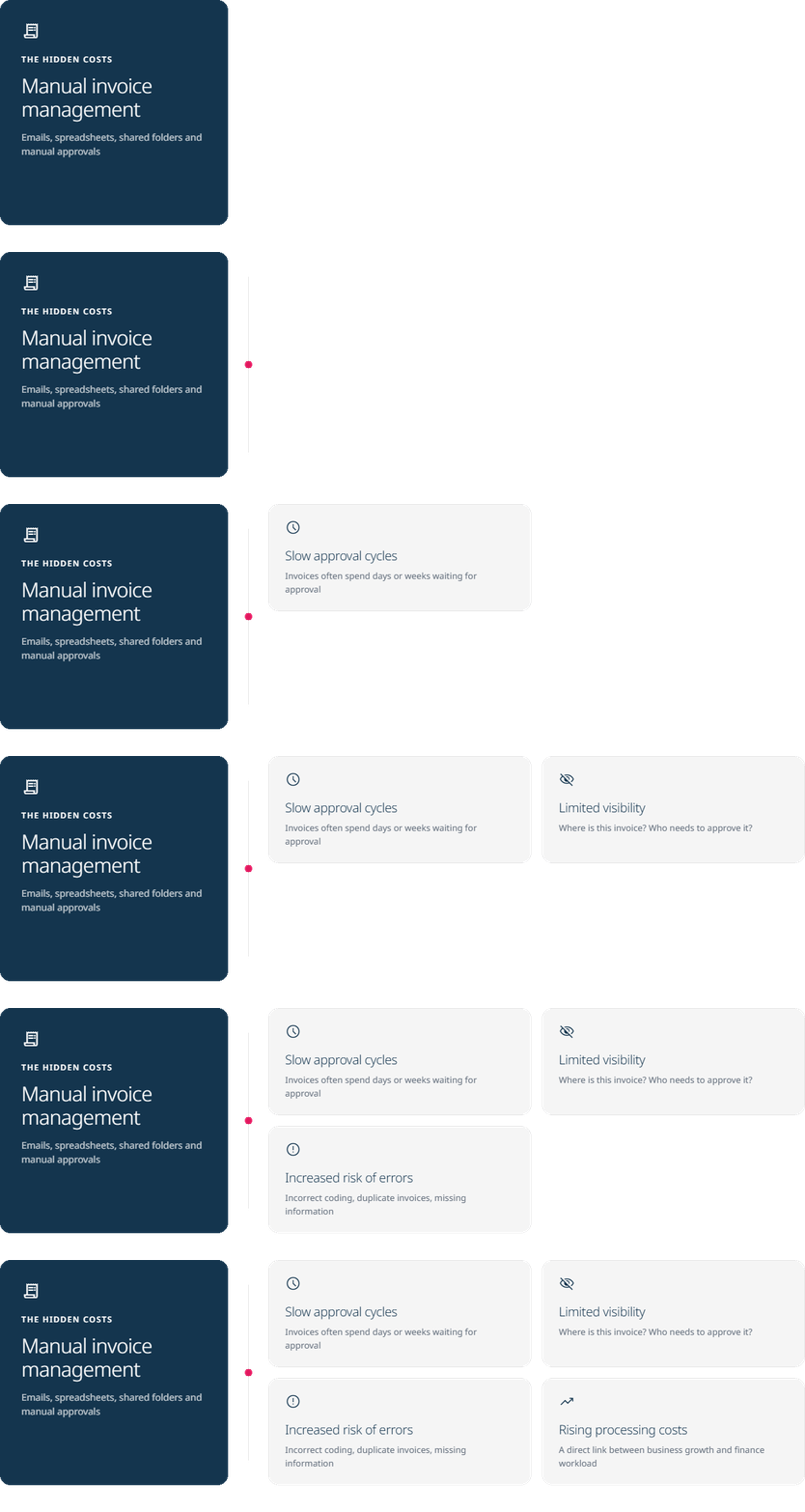
Slow approval cycles
Invoices often spend days or weeks waiting for approval. Approvers may be unavailable, email chains become difficult to track and finance teams lose visibility over where invoices are sitting in the process.
The consequence is delayed payments, strained supplier relationships and avoidable administrative effort.
Limited visibility
One of the most common frustrations within finance departments is the inability to answer simple questions quickly. Where is this invoice? Who needs to approve it? Has it already been processed? When is it due for payment?
Without real-time visibility, finance teams spend significant time investigating information rather than acting on it.
Increased risk of errors
Manual data entry inevitably creates opportunities for mistakes. Incorrect coding, duplicate invoices, missing information and payment errors can lead to financial losses, compliance issues and supplier disputes.
Rising processing costs
As invoice volumes grow, organisations often respond by adding more administrative effort.
This creates a direct link between business growth and finance workload – a model that quickly becomes unsustainable.
Is your Accounts Payable process reaching its limits?
As invoice volumes grow, many finance teams begin to notice operational friction that is difficult to eliminate through manual processes alone. Common warning signs include:
- Invoices regularly remain in approval queues for several days
- Suppliers frequently contact finance teams for payment updates
- Significant time is spent manually entering invoice data
- Preparing for audits requires extensive document retrieval
- Teams struggle to obtain a real-time view of invoice status
- Accounts Payable resources are focused on transaction processing rather than higher-value activities
When these issues become persistent, they often indicate that the underlying process needs to evolve rather than that teams need to work harder.

What does good invoice management look like?
Effective invoice management is not simply about processing invoices faster. It’s about creating a controlled, transparent and scalable process that supports both operational efficiency and financial governance.
High-performing finance teams typically achieve:
- Faster invoice processing times
- Clear approval accountability
- Full visibility into invoice status
- Strong audit trails
- Reduced exception rates
- Consistent compliance controls
- More positive supplier experiences
Most importantly, they create processes that can absorb growth without requiring proportional increases in headcount.
Webinar Replay – Today’s AI for Finance: with Yooz the Future of Accounts Payable Starts Now!
Discover how modern AP automation, powered by Yooz’s AI‑driven platform, delivers simplicity, visibility, and control across your AP processes.

How AP automation enables modern invoice management
The best practices of modern invoice management are no longer achieved through process discipline alone.
AP automation provides the foundation that allows finance teams to standardise workflows, gain real-time visibility, strengthen controls and reduce manual effort at scale.
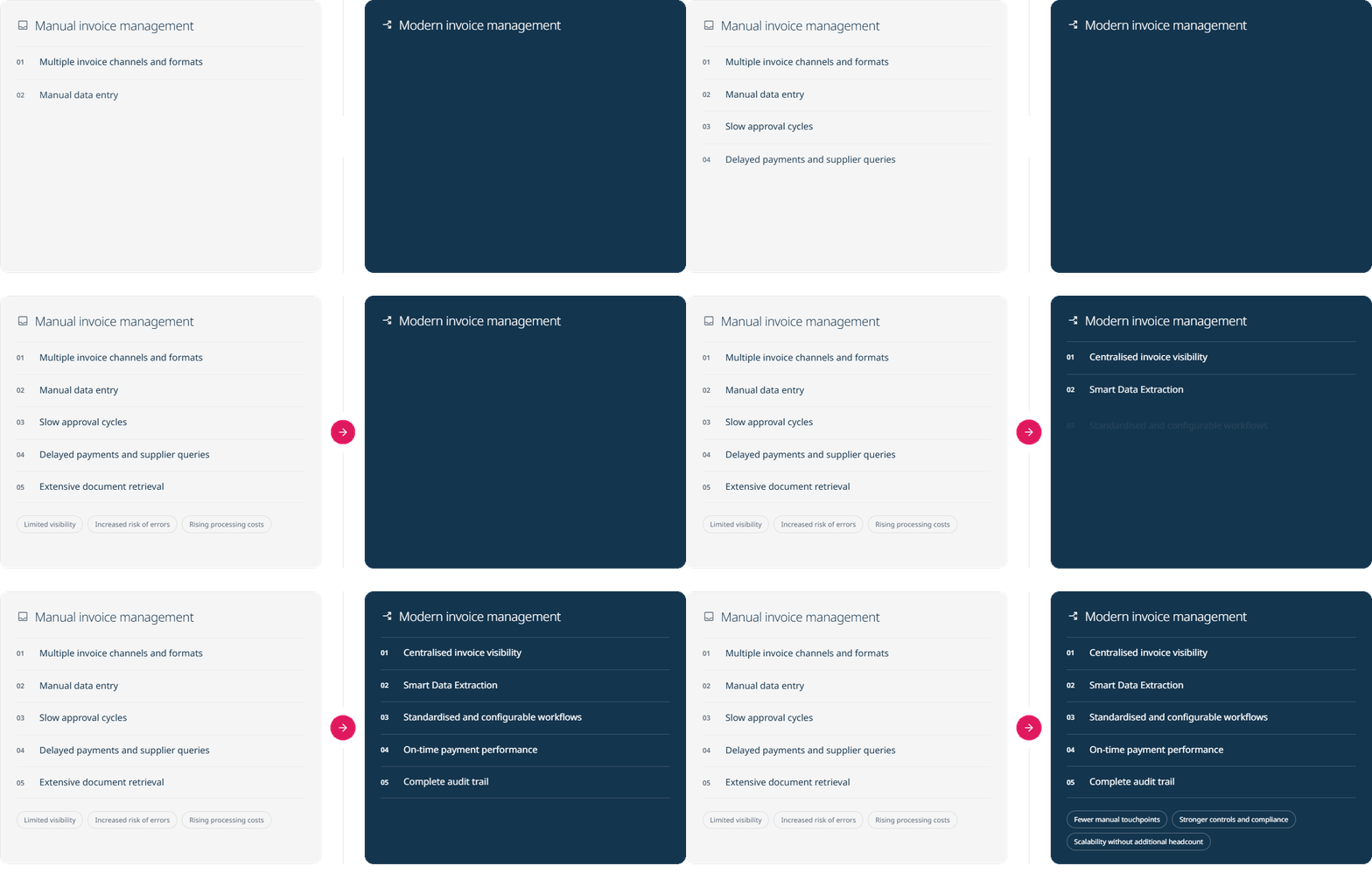
Standardised and configurable workflows
Manual invoice processes often vary from one department, approver or business unit to another.
AP automation creates standardised workflows that automatically route invoices according to predefined and highly customisable rules, ensuring consistent treatment and reducing approval delays.
Centralised invoice visibility
One of the most common frustrations in Accounts Payable is the lack of visibility into invoice status.
Innovative Accounts Payable automation solutions centralise invoices, supporting documents, approval records and audit trails within a single environment, making information instantly accessible to finance teams and stakeholders.
Real-time performance monitoring
Improving invoice management requires more than intuition.
AP automation provides real-time reporting on key performance indicators such as:
- Invoice processing time
- Approval cycle duration
- Exception rates
- Cost per invoice
- On-time payment performance
This visibility allows finance leaders to identify bottlenecks and continuously optimise processes.
Fewer manual touchpoints
Every manual intervention introduces time, cost and risk.
Through technologies such as artificial intelligence, Smart Data Extraction and workflow automation, organisations can significantly reduce repetitive activities such as data entry, invoice routing and approval follow-ups.
Stronger controls and compliance
As businesses grow, maintaining consistent controls becomes increasingly challenging.
Automation enforces approval policies, strengthens audit readiness and creates a complete audit trail for every invoice processed.
Scalability without additional headcount
Perhaps the most significant advantage of AP automation is scalability.
Rather than increasing administrative workload as invoice volumes rise, organisations can absorb growth while maintaining efficiency and control.
Optimising invoice management is about more than operational efficiency. It’s about freeing finance teams to focus on higher-value work while maintaining visibility, control and scalability. For many businesses, automation is no longer simply an opportunity for improvement. It has become a necessary step towards building a more agile and future-ready finance function.
Ready to transform your Accounts Payable process?

Personalized demo
Discover Yooz, the smartest, most powerful, and easiest-to-use solution!
Additional Resources


Purchase to Pay Process – Yooz AP Automation

3-way matching in Accounts Payable

A guide to AP automation software


