


Yooz 2026 AI in Finance Report
Finance Teams Are Using AI More Than You Think, and Ready to Put It to Work at Scale.
Two thirds of finance teams are using or piloting AI, and growing confidence signals the next phase: embedding AI into core workflows to drive efficiency, improve accuracy, and fight fraud.
AI is quickly becoming part of the finance toolkit, even if many teams still describe their efforts as being in the early stages of development. New survey findings from Yooz suggest adoption is already broader than outsiders might assume. Two thirds of finance teams say they are using or piloting AI, signaling that experimentation is giving way to real workflow exposure.
Confidence is moving in the right direction as adoption expands. In fact, Yooz’s latest research shows that more than half of finance pros are more confident using AI than they were a year ago. At the same time, 10% say AI is embedded in core processes, which points to an opportunity: the next phase of value will come from integrating AI directly into standardized, repeatable workflows that drive consistent outcomes at scale.
That shift matters because finance teams are under pressure to move faster with fewer resources, maintain strong controls, and produce more timely insights. Embedding AI into core processes such as AP automation or fraud prevention is how organizations move from experimentation to measurable impact, strengthening efficiency and oversight while freeing teams to focus on higher-value work.
To understand how finance teams are adopting AI and if confidence is keeping pace, Yooz partnered with the third-party survey platform Pollfish. The Yooz 2026 Finance Team AI Confidence Report survey was conducted in January 2026, surveying 500 finance professionals across various industries. Respondents provided insights on their self reported perceptions of AI usage and readiness, including adoption stage, use cases, perceived benefits, and barriers.
Key Findings of the Yooz 2026 Finance Team AI Confidence Report
- AI adoption is mainstream in finance, with clear opportunity for deeper integration. Two thirds of finance teams (67%) say they are using or piloting AI, and 10% report it is already embedded in core processes, signaling strong momentum and significant room for expanded integration.
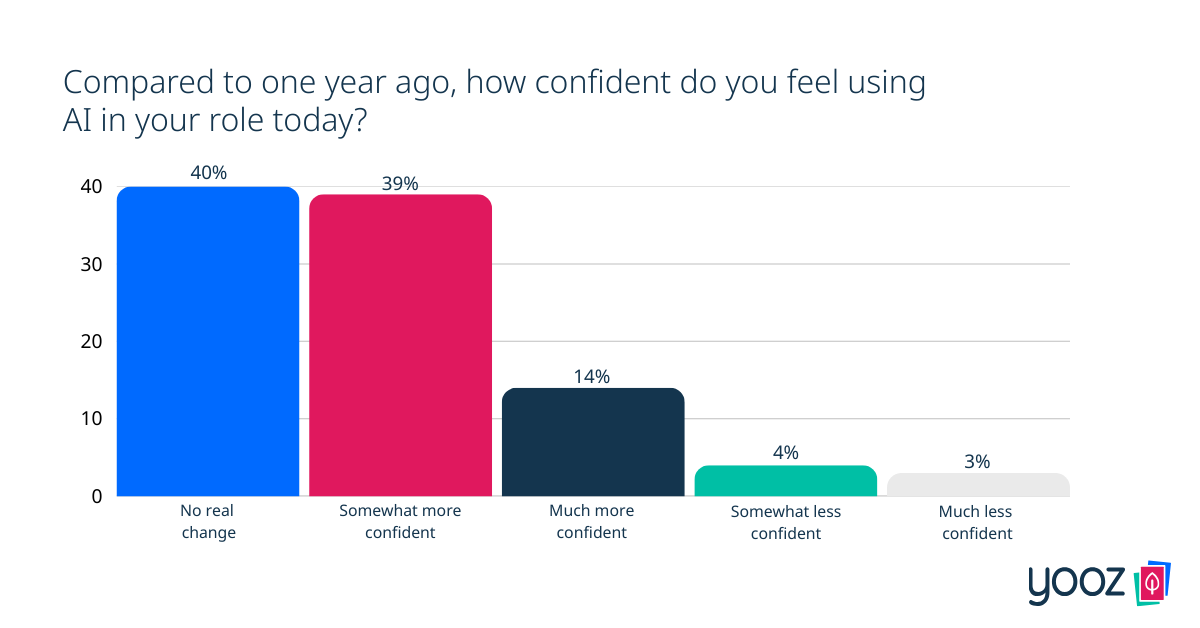
- Confidence is trending upward as familiarity grows. 53% say they are more confident using AI than a year ago, and 40% report no change. This suggests the next opportunity is accelerating confidence through AI literacy and deeper integration into standardized workflows.
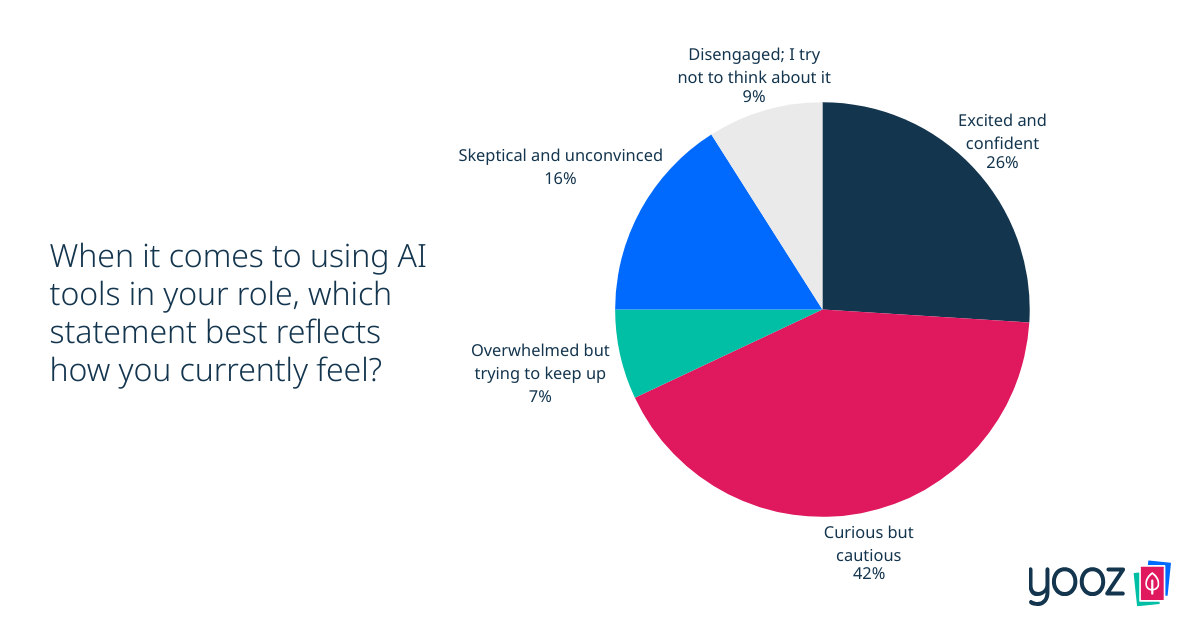
- Finance teams are leaning in with disciplined optimism. The most common mindset toward AI is curious but cautious (42%), and a majority say they feel confident using AI in day-to-day work.
- Reporting is a common entry point, with expansion underway. 43% report using AI in reporting or analytics, followed by forecasting and planning (27%).
- Fraud prevention and controls represent a high-impact growth area. Only 19% say they use AI for audit, risk, compliance, or fraud detection and prevention, indicating a significant opportunity to pair productivity gains with stronger protection and oversight.
- AI usage is often broader than it appears. About a third agree their team uses AI more than outsiders realize, suggesting AI is increasingly embedded into everyday processes, even when not explicitly labeled as such.
- Efficiency gains are emerging, with room to standardize impact. 32% cite time savings on manual tasks as the top benefit, while 33% say they have not yet seen clear benefits, pointing to an opportunity to move from isolated wins to repeatable, workflow-level results.
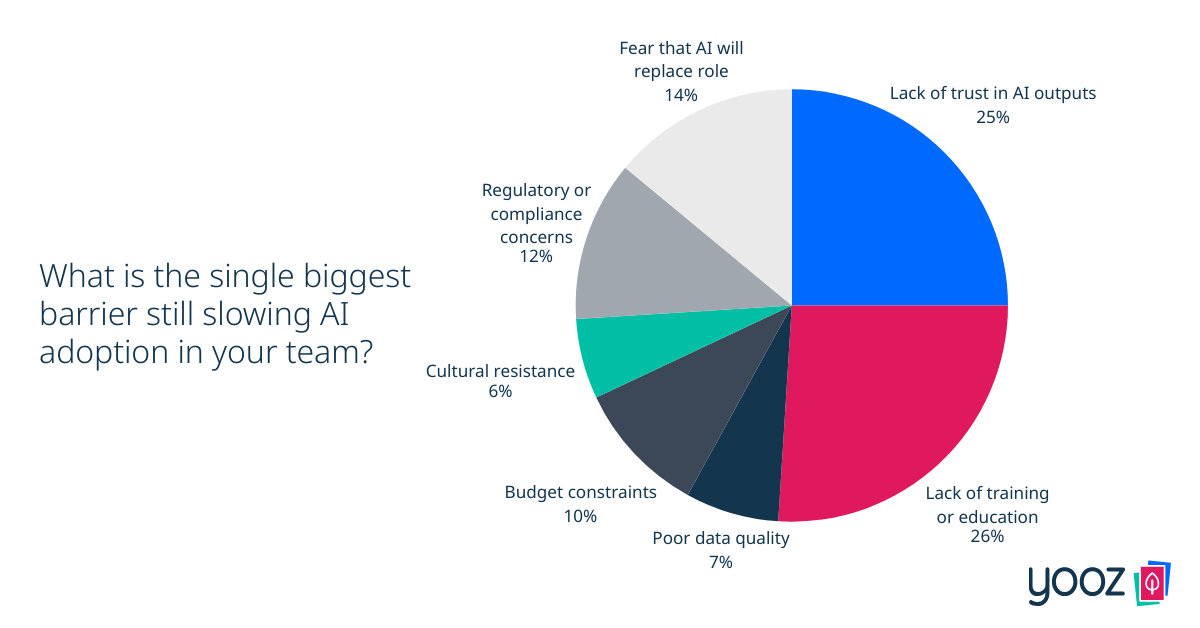
- Readiness and trust are the primary levers for acceleration. Lack of training or education (26%) and lack of trust in AI outputs (25%) rank as the top barriers, outweighing regulation or compliance concerns (12%) and budget constraints (10%).
- Leadership alignment will shape the next phase of adoption. IT is most often named as the driver of AI adoption in finance (24%), compared to 13% who point to the CFO or VP of Finance, and 22% who say no one in particular is driving adoption. As finance leadership becomes more visibly accountable, adoption is likely to become more coordinated and scalable.
AI use is spreading in finance, but it is not yet embedded
Two thirds of finance teams (67%) say they are using or piloting AI, but only 10% say it is embedded in core processes. At the other end of the spectrum, 22% say their finance team does not use AI at all, indicating adoption is widespread but not universal.
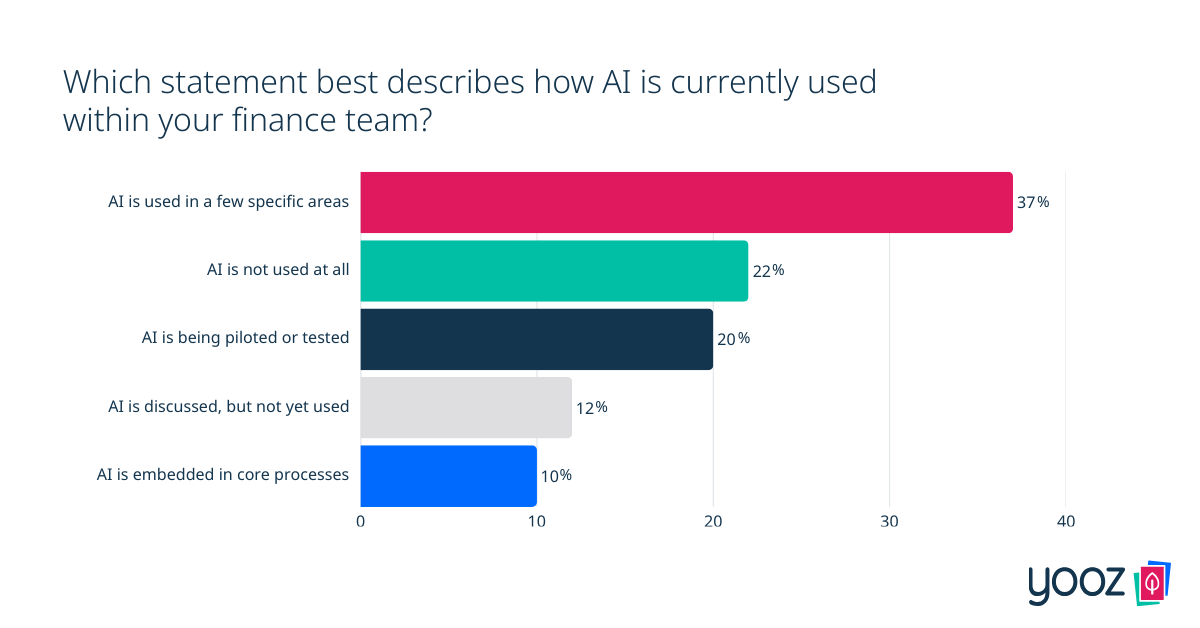
Looking at this another way, most organizations are in the middle: AI is present, but not always operationalized. The “using or piloting” group includes teams that report AI is used in a few specific areas (37%) and those piloting or testing (20%), which are both signals of activity but not necessarily standardized, repeatable workflow integration.
The data also suggests AI adoption may not be fully visible across the organization. About a third of respondents agree their team uses AI more than outsiders realize (9% strongly, 23% somewhat).
That visibility gap likely reflects how AI is embedded into everyday finance workflows. Many teams interact with AI through automated invoice processing, anomaly detection, and background controls that surface risk signals without being explicitly labeled as AI. As a result, AI is actively powering processes behind the scenes, even if it is not always recognized as such at the organizational level.
AI confidence is rising, with acceleration on the horizon
Confidence is trending up as AI adoption expands across finance. Just over half of respondents (53%) say they are more confident using AI than they were a year ago, a clear signal that familiarity and real-world application are building momentum. The next growth opportunity is bringing the remaining 40% along by embedding AI into repeatable workflows, clearer standards, and guardrails that make outcomes more consistent.
That momentum shows up in how finance teams describe their relationship with AI today. The dominant mindset is curious but cautious (42%), which indicates strong interest paired with the risk awareness finance teams need to scale responsibly. And a majority (51%) say they feel confident using AI tools in day-to-day finance work (15% strongly, 36% somewhat).
Turning curiosity into consistent adoption requires embedding AI into shared workflows. For example, in AP, if AI flags duplicate invoices and unusual vendor behavior within a standardized approval process, every transaction is screened the same way before payment. That consistency reduces manual review time and strengthens controls at the transaction level. With reliable guardrails in place, finance teams are better positioned to extend AI into higher-stakes activities such as cash management, forecasting inputs, and audit preparation, where accuracy, oversight, and repeatability are critical.
Cautious optimism is shaping finance’s AI momentum
Finance teams are leaning in with a constructive, forward-looking mindset. When asked how they feel about using AI tools in their role today, 68% describe themselves as either excited and confident or curious but cautious. That combination shows a strong appetite for AI paired with the discipline finance teams apply to any technology that touches financial data and controls.
Fraud prevention and controls are the next high-impact phase of finance AI adoption
AI use in finance is expanding, but the biggest near-term opportunity is applying it where accuracy, oversight, and protection matter most. Only 19% of finance teams say they use AI for audit, risk, compliance, or fraud detection and prevention, indicating significant potential for organizations that want to strengthen controls while scaling automation.
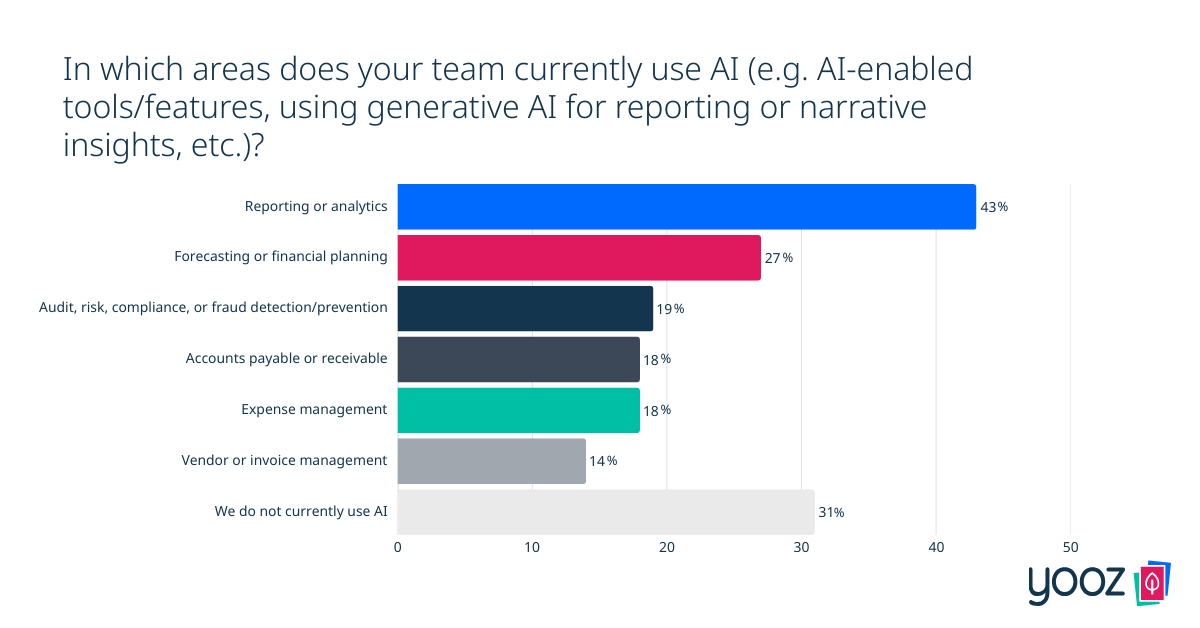
Reporting and analytics remains a common early entry point, with 43% saying their team uses AI there, likely because outputs are easier to generate and validate quickly. But as adoption matures, the differentiator will be embedding AI into transaction-heavy workflows where money moves and risk concentrates. That is where AI can add the most value by flagging anomalies, surfacing exceptions, and supporting consistent approvals and oversight, so teams can move faster without weakening controls.
The real accelerators of AI adoption: readiness, trust, and sponsorship
Readiness and trust remain critical factors in scaling AI adoption across finance organizations. When asked what is slowing adoption most, 26% cite a lack of training or education and 25% cite a lack of trust in AI outputs. By comparison, only 12% point to regulatory or compliance concerns and 10% cite budget constraints. The ranking suggests the primary challenge is not access to tools, but whether teams feel prepared and whether results are reliable enough to use consistently.
That theme continues in how adoption is being led. Respondents most often name IT or technology teams as the primary driver (24%), while only 13% point to the CFO or VP of Finance. Another 22% say no one in particular is driving adoption. In practice, that combination can produce uneven progress: tools may be available, but standards, training, and workflow-level priorities can vary by team, which makes it harder to move from experimentation to embedded capability.
Taken together, the data suggests finance teams are not being held back by cost alone or by external rules, but by internal operating conditions: enablement, trust, and visible leadership ownership. If lack of training or education and lack of trust in outputs are the top barriers, the solution is broader than product instruction. Teams need AI literacy, an understanding of what AI is, how it works, and where it is already embedded in their systems, alongside practical enablement that shows how outputs should be reviewed and applied. When education and hands-on process integration move in parallel, confidence grows faster and adoption becomes more consistent across the function.
How AI enables Lean Financial Operations
AI in finance is evolving from a standalone tool to an embedded capability. The strongest results come when AI is woven into the workflows finance already runs, so teams get speed and consistency without adding complexity. That is how organizations move from pilots to measurable Lean Financial Operations: fewer manual touchpoints, fewer exceptions, and stronger controls built into the work.
Lean Financial Operations depend on standard work, visibility, and continuous improvement. Embedded AI supports that model by reducing avoidable rework that consumes capacity, like chasing missing invoice details, re-keying data, reconciling mismatches, rerunning reports, and revisiting approvals. When AI is integrated into the process, finance teams spend less time on cleanup and more time on oversight and insight.
To move from early adoption to embedded capability, consider a focused, lean approach:
- Start with high-impact finance applications. Many organizations begin with areas such as accounts payable, reporting, or financial analytics where AI can automate data capture, flag anomalies, and reduce manual review before expanding into additional processes.
- Build education and workflow-level enablement. Go beyond product training. Make sure teams understand what AI is, how it works, and where it is already operating in your systems. Then teach how AI fits into each workflow, what outputs mean, and what “done right” looks like.
- Build trust with guardrails that match risk. Use AI to catch issues the human eye often misses, like duplicate invoices, unusual vendor behavior, and out-of-policy transactions. Route exceptions into a clear human review path, with documentation and approval thresholds aligned to the stakes.
- Advance controls in parallel with productivity. As AI helps teams move faster, ensure controls keep pace anywhere money moves, approvals happen, or risk increases. This is where embedded AI can strengthen protection while supporting scale.
- Make leadership visible and accountable. Assign a finance owner for AI-enabled workflows, set priorities, and measure progress. Adoption scales when standards and oversight are coordinated, not left to individual preference.
“Finance teams don’t need more hype. They need practical ways to take friction out of the work that slows the business down,” said Yooz CEO Laurent Charpentier. “The path to AI value is the same path to Lean Financial Operations: standardize what matters, automate what is repeatable, and strengthen controls as you scale. The winners will be the organizations that turn experimentation into consistent, secure, end-to-end processes that free finance teams to focus on insight and impact.”