


Key Takeaways
- A PO procedure is a financial control framework, not just an operational task
- A structured purchase order process ensures visibility, compliance, and audit readiness
- Manual purchase order processes create risk, inefficiency, and hidden costs
- Modern purchase order processing enables finance teams to move from reactive to proactive
- Automation and standardization are the keys to scaling the order process effectively
How Modern Financial Leaders Rethink the Purchase Order Process
For many organizations, the PO procedure still lives in the shadows of finance operations, treated as administrative overhead rather than a strategic control point. But that mindset is costly.
Today, the purchase order procedure is one of the most powerful levers finance leaders have to control spend, enforce compliance, and unlock real time visibility across the business. When done right, it transforms the entire order process from reactive to controlled, predictable, and scalable.
The reality: companies that treat their PO process as paperwork will always lag behind those that embed it into financial strategy.
What is a PO Procedure, Really?
At its core, a PO procedure is the structured framework that governs how a company requests, approves, orders, receives, and pays for goods or services.
It connects procurement and finance by ensuring every purchase is:
- Approved before money is committed
- Fully documented and traceable
- Aligned with budgets and policies
A purchase order itself becomes a legally binding agreement once accepted by the vendor, locking in pricing, terms, and expectations.
In other words, a strong purchase order processing strategy is not just operational, it is financial governance in action.
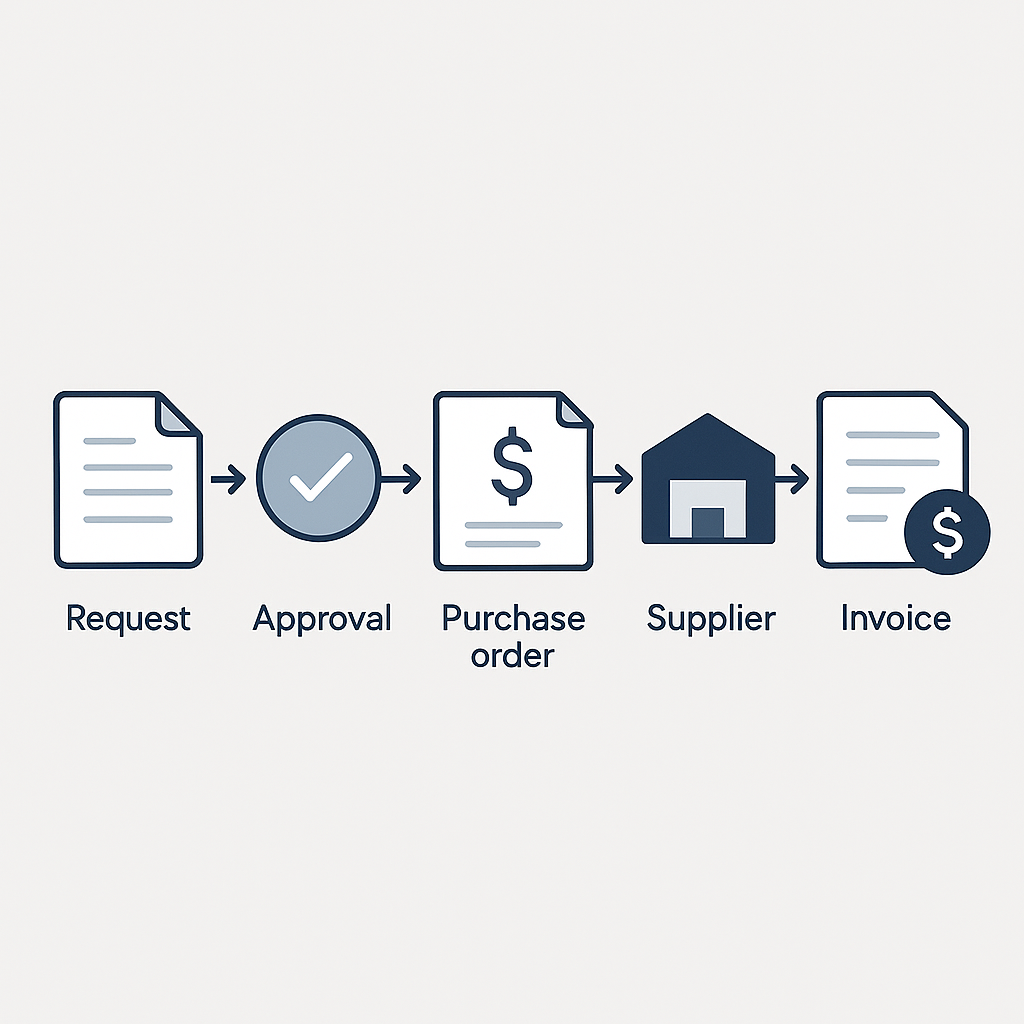
The Modern Purchase Order Process: From Request to Payment
While every organization adapts the workflow to its specific needs, a high-performing purchase order process typically follows a clear, structured sequence:
Purchase requisition
A department identifies a need and submits an internal request.
Approval workflow
Finance or management reviews the request to verify budget availability, policy compliance, and business necessity.
Purchase order creation
A formal purchase order is generated, detailing quantities, pricing, delivery terms, and vendor information.
Vendor submission
The purchase order is sent to the vendor and becomes a binding agreement upon acceptance.
Receipt of goods or services
The organization verifies that the goods or services have been delivered as ordered and meet quality expectations.
Invoice matching and payment
The invoice is matched against the purchase order and receipt, often through three-way matching, before payment is approved and processed.
This structured process promotes accuracy, accountability, compliance, and audit readiness at every stage of the procurement lifecycle.
Why Financial Leaders are Rethinking the PO Process
A well-defined PO process drives measurable value across finance, procurement, and operations:
1. Real spend control
POs enforce pre-approval, giving finance visibility into committed spend before invoices arrive.
2. Stronger compliance
A documented purchase order procedure ensures every transaction follows policy and leaves a clear audit trail.
3. Reduced risk and errors
Structured workflows prevent duplicate orders, pricing discrepancies, and unauthorized purchases.
4. Better vendor relationships
Clear, consistent purchase order creation improves communication and reduces disputes
5. Operational efficiency
Organizations with optimized PO workflows report lower costs, faster cycle times, and fewer bottlenecks
For finance leaders, the takeaway is clear: the PO procedure is no longer back office but core to financial performance.
The Hidden Cost of a Manual Purchase Order Process
Despite its importance, many organizations still rely on a manual purchase order process driven by spreadsheets, emails, or disconnected systems.
The consequences are predictable:
- Delayed approvals and bottlenecks
- Duplicate or erroneous orders
- Lack of real-time visibility into spend
- Invoice mismatches and payment delays
Manual workflows can also introduce cascading errors that create downstream issues for finance, from reconciliation challenges to audit risk.
Even more critically, manual PO processing limits scalability. What works at small volume quickly breaks under growth.
From Control to Performance: Elevating Purchase Order Processing
Forward-thinking finance teams are evolving their purchase order processing approach from control-focused to performance-driven.
This shift includes:
- Standardizing the purchase order procedure across all entities as part of a broader purchase order management framework
- Enforcing policy through structured approval workflows
- Integrating procurement with finance systems for visibility
- Automating matching, validation, and routing
Solutions like Yooz help organizations digitize the PO process end-to-end, reducing manual intervention while strengthening compliance and control.
The result is not just efficiency, but a smarter, data-driven procurement strategy.

Personalized demo
Discover Yooz, the smartest, most powerful, and easiest-to-use solution!
PO Procedure FAQs
What is the PO procedure?
A PO procedure is the structured process companies use to request, approve, create, and manage purchase orders, ensuring all spending is authorized, documented, and aligned with policy.
What is the difference between a purchase order process and purchase order processing?
The purchase order process refers to the full workflow from request to payment, while purchase order processing focuses on managing and executing each step efficiently, including tracking, approvals, and invoice matching.
Why is purchase order creation important?
Purchase order creation formalizes purchasing decisions with clear details, pricing, and terms, creating a legally binding document once accepted and ensuring accountability across the organization.
What are the main risks of a manual purchase order process?
Manual processes often lead to delayed approvals, duplicate orders, invoice mismatches, lack of visibility, and increased risk of compliance issues or fraud.
How can finance leaders improve their PO process?
Finance leaders can improve their PO process by standardizing procedures, enforcing approval workflows, integrating systems, and leveraging automation to reduce errors and increase visibility.
Additional Resources

Understanding the Purchase Order Process Flow