


AI purchase order automation streamlines the entire Purchase Order (PO) lifecycle by using machine learning, NLP, and workflow intelligence to capture data, generate orders, validate compliance, optimize approvals, and improve procurement efficiency and spend management. By leveraging these capabilities, organizations turn a traditionally manual process into a fast, accurate, and self‑improving workflow.
Purchase orders were never meant to slow procurement teams down. Yet for many organizations, they still involve manual data entry, scattered approvals, and constant follow-ups that drain time and increase risk. AI purchase order automation changes that dynamic by enabling intelligent purchase order processing and faster procurement operations. Instead of chasing paperwork, procurement teams can rely on intelligent systems that generate, validate, and route purchase orders automatically while maintaining control and visibility.
By leveraging AI, organizations can move beyond basic purchase order management to intelligent, automated purchase orders that learn from past activity and scale effortlessly as demand grows.
In this guide, you’ll learn what an AI purchase order is, how AI-driven purchase order automation works, and how to start modernizing procurement without disrupting your existing systems.
What Is AI Purchase Order Automation?
AI purchase order automation is a smarter way to handle purchase orders, using artificial intelligence to create, validate, route, and manage purchase orders automatically with minimal manual intervention.
Most procurement teams already automate parts of the process, like submitting forms or routing approvals. But those systems still depend on rigid rules and frequent human intervention. Someone must fix errors, chase approvals, or handle exceptions when something falls outside the rules.
AI changes that experience.
An AI-powered purchase order system can read and understand purchase requests from emails, forms, or invoices, then automatically create purchase orders using past purchases, vendor data, and business context. It checks spending against budgets and contracts, decides who needs to approve what, and moves each order forward without constant follow-up.
Over time, the system gets better at this. It learns from decisions and adjustments, so common purchases move faster while higher-risk ones get the right level of attention. This is what people mean when they talk about an agentic approach to procurement. The system does not just support the process. It actively drives it.
The result is a purchase order workflow that keeps things moving as the business grows, without adding more manual work or sacrificing control.
Traditional Automation vs AI Purchase Order Automation
| AI Purchase Order Automation | Traditional Purchase Order Automation |
|---|---|
| Automates decisions | Automates tasks |
| Adapts to context and data | Relies on fixed rules |
| Proactive validation and routing | Manual exception handling |
| Dynamic, risk-based approvals | Static approval paths |
| Continuously improves | No learning over time |
Why AI Purchase Orders Matter Now
Procurement teams are being asked to move faster, reduce costs, and deliver real-time visibility into spend as purchase volumes and supply chain complexity continue to grow. Manual purchase orders and rule-based automation struggle in this environment because they cannot adapt. AI purchase order automation addresses this gap by reducing manual data entry, removing approval bottlenecks, enforcing compliance automatically, and delivering real-time insight into purchasing activity.
As AI adoption accelerates across finance and operations, organizations that delay modernizing purchase order processes risk falling behind those already leveraging AI for smarter, more scalable procurement.
Benefits of AI Purchase Order Automation
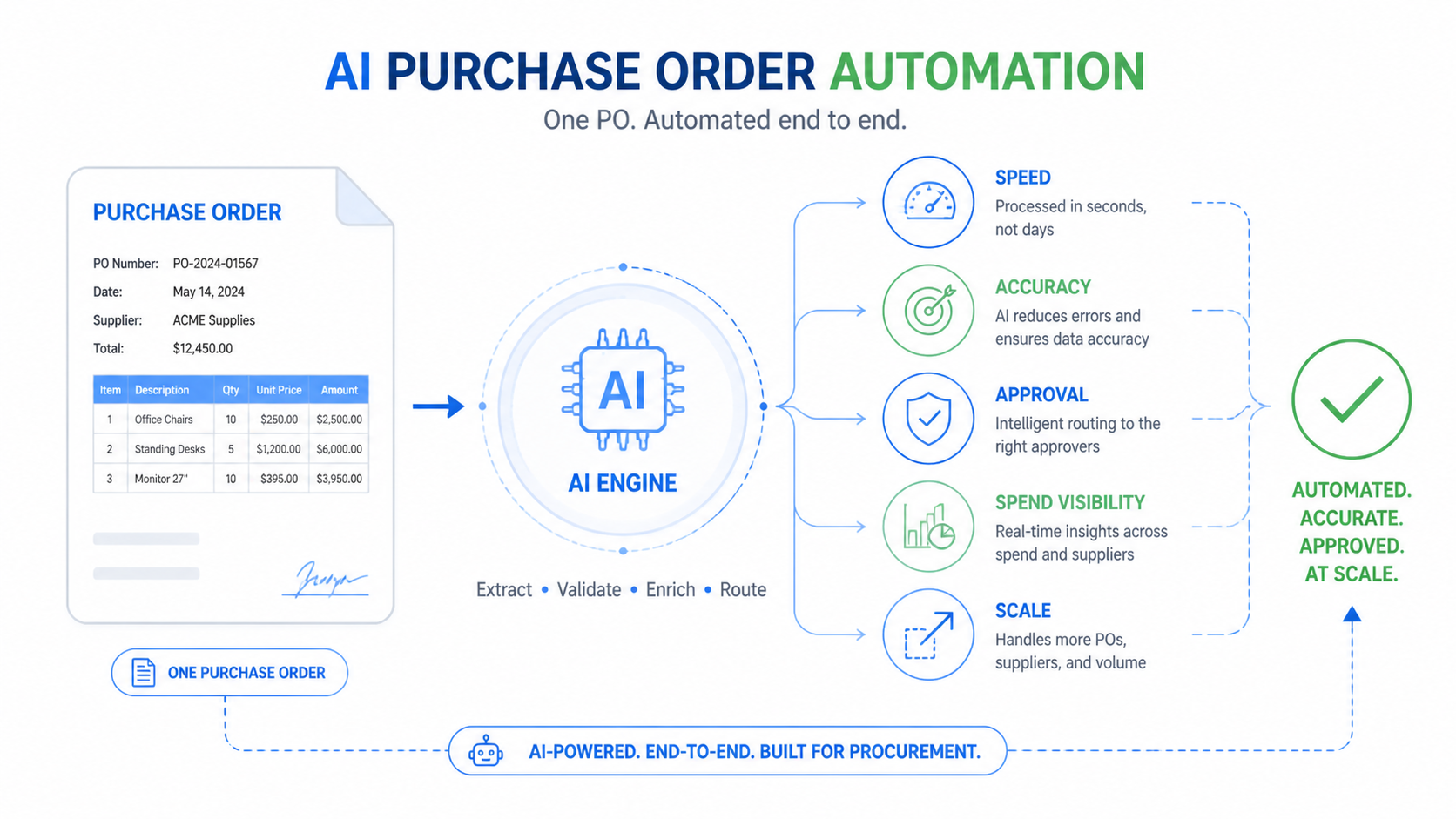
AI purchase order automation helps organizations manage purchase orders faster, more accurately, and with greater visibility. Key benefits of using AI for purchase orders include:
- Faster purchase order creation
AI generates purchase orders in seconds using requisitions, vendor records, contracts, and historical data. - Reduced errors and exceptions
Automated purchase orders validate data before submission, catching missing fields, pricing issues, duplicates, and policy violations before submission. - Real-time spend visibility
Every AI purchase order is tracked and analyzed in real time, giving finance and procurement teams a clear view of where money is being spent and why. - Smarter approval workflows
AI routes purchase orders dynamically based on spend thresholds, department rules, or risk signals to eliminate approval bottlenecks. - Scalable procurement operations
AI purchase order automation supports growing volumes of purchase orders without increasing manual workload or headcount. - Stronger vendor relationships
Faster, more accurate purchase orders reduces disputes, support on-time payments, and improves vendor communication.
AI purchase order automation speeds purchase order creation, reduces errors, improves approval flow, delivers real-time spend visibility, and scales procurement operations without added headcount.
How AI Purchase Order Automation Works
AI purchase order automation takes the slow, manual PO process and turns it into a fast, intelligent, self-improving workflow. Instead of chasing down data, double-checking budgets, or waiting on approvals, teams can leverage AI to handle the repetitive work and keep purchasing moving smoothly.
Smart Data Capture
AI pulls key details from requisitions, emails, vendor quotes, catalogs, and invoices. Using OCR and machine learning, it instantly extracts vendor names, pricing, quantities, and delivery terms.
Automated Purchase Order Creation
Once the information is captured, the system automatically generates the purchase order. It follows your business rules, preferred vendor logic, and even historical purchasing patterns to ensure accuracy. For repeat purchases, AI can even suggest or auto-create recurring POs.
Validation and Compliance Checks
Each purchase order is checked against budgets, contract terms, policy rules, and vendor data. This reduces compliance risks and prevents costly mistakes long before the PO is approved.
Dynamic AI Approval Routing
Instead of rigid approval chains, AI routes purchase orders based on risk, value, and past approval patterns. Routine purchases move faster, while higher-risk requests receive additional review. Over time, the system learns your workflows and continuously improves purchase order automation efficiency.
ERP and Finance System Integration
AI purchase order solutions integrate directly with ERP and other financial systems, ensuring clean, consistent data across every platform and eliminating manual handoffs.
Continuous Learning and Optimization
Every correction, approval, and exception teaches the AI model something new. The more your team uses it, the smarter and more accurate the predictions, automations, and recommendations. These capabilities allow organizations to leverage procurement AI to automate repetitive purchasing tasks while improving accuracy and control.
Key Use Cases for AI Purchase Order Automation
AI purchase order automation adapts to support real-world needs, making it easier for teams to stay consistent, compliant, and efficient at scale. Some impactful scenarios include:
- Recurring purchases: Automatically generate POs for frequently ordered materials or services.
- Catalog-based buying: Create purchase orders directly from the approved vendor catalog with associated pricing and terms.
- Invoice-driven POs: Generate purchase orders from invoices when no PO exists.
- Multi-entity operations: Standardize purchase orders across regions, departments, or subsidiaries without sacrificing flexibility.
These use cases highlight how organizations can leverage AI to adapt to different procurement models while bringing greater consistency, accuracy, speed, and control to every stage of the purchasing process.
How to Get Started
Adopting AI purchase order automation doesn’t require a complete overhaul of your existing systems. Modern platforms are designed to integrate with current workflows and ERP environments with minimal disruptions. Taking a structured approach helps ensure a smooth, efficient transition.
Step 1: Evaluate your Current Workflow
Identify where delays, manual entry, or errors occur in your current process.
- Where are delays happening?
- How much manual data entry is involved?
- What type of errors occur most often?
Step 2: Define Clear Objectives
Clarify what you want to achieve.
- Faster purchase order processing?
- Reduced manual workload?
- Improved compliance and visibility?
Having clear goals will guide your solution selection.
Step 3: Choose the Right AI Purchase Order Platform
Look for a solution that offers:
- Intelligent data capture and validation
- Flexible approval workflows
- Seamless ERP integration
- Proven scalability for future growth
Ease of use is critical to rapid adoption by both procurement and finance teams.
Step 4: Start with a Pilot Program
Launch in a controlled environment such as one department or use case. This allows you to test performance, refine workflows, and demonstrate value quickly.
Step 5: Train Teams and Standardize Processes
Change management is critical. Provide training and establish standardized processes to maximize efficiency and help users understand how AI enhances their work rather than replaces it.
Step 6. Monitor, Measure, and Optimize
Track key metrics including:
- Purchase order cycle times
- Error rate
- Approval turnaround times
Use these insights to continuously improve your automation strategy.
Final Thoughts
The AI purchase order is no longer a future concept. It is a practical, high-impact solution that modern procurement teams are already using to transform their operations. By leveraging AI, organizations shift from manual, reactive processes to automated, intelligent workflows that deliver speed, accuracy, and financial control.
For leaders focused on efficiency, scalability, and smarter decision-making, AI purchase order automation is a competitive necessity.
Ready to Transform Your Procurement Process?
If you’re looking to streamline workflows and boost accuracy, now is the time to explore AI purchase order automation. It’s fast, scalable, and built to help teams work smarter. Reach out to learn more today!

Personalized demo
Discover Yooz, the smartest, most powerful, and easiest-to-use solution!
FAQs for AI Purchase Order Automation
What makes AI purchase order automation different from traditional PO automation
Traditional automation follows fixed rules and still relies on manual exception handling. AI purchase order automation adapts to context, validates data proactively, routes approvals dynamically, and improves over time based on real purchasing behavior.
Do AI-powered purchase orders replace procurement teams?
No. AI removes repetitive, low-value tasks like data entry and follow-ups so teams can focus on strategic decisions, vendor relationships, and spend optimization while maintaining full control and visibility.
How does AI handle approvals and compliance?
AI validates each purchase order against budgets, contracts, and policies, then routes it using dynamic, risk-based approvals. Routine purchases move faster, while higher-risk requests receive the right level of review automatically.
Can AI purchase order automation work with existing ERP systems?
Yes. Modern AI purchase order solutions integrate directly with ERP and finance systems, ensuring consistent data, eliminating manual handoffs, and preserving existing workflows.
How quickly can organizations see value from AI purchase order automation?
Many organizations see immediate gains from AI purchase order automation, including faster PO creation, reduced manual processing, fewer errors, improved procurement visibility, and smoother approval workflows.

Additional Resources

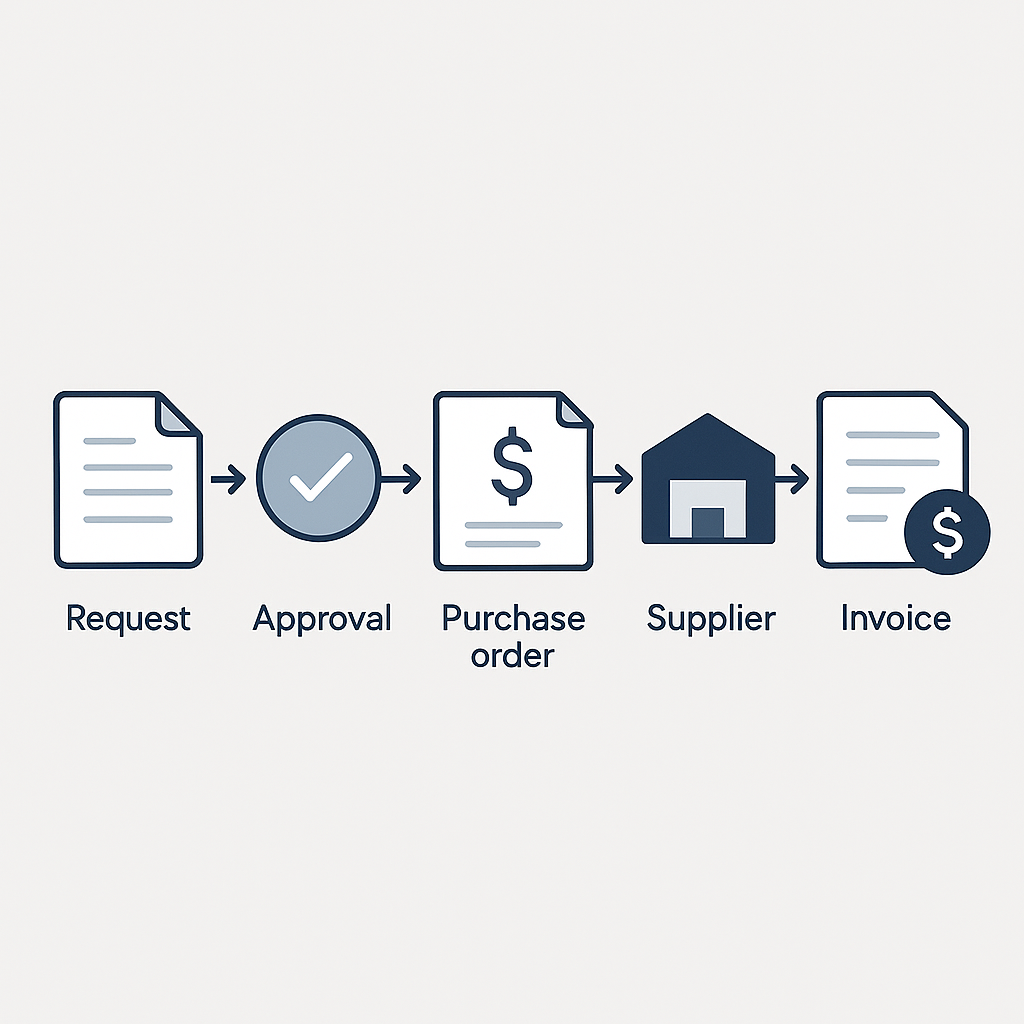
Understanding the Purchase Order Process Flow